Strength of Schedule Could Seal Twins Playoff Fate

After sweeping the Orioles this weekend, their first series sweep since July 8th (which was also against Baltimore), the Twins finished the weekend making up 2½ games in the Wild Card standings, and now trail the resurging Texas Rangers by only 1½ games for the final playoff spot.  Minnesota did suffer a key injury to outfielder Aaron Hicks earlier in the week, and did make what I think is a great trade to bolster the bullpen over the weekend (I will address each later in the week).  With ten teams off today, I decided to look into the remaining schedule for the AL division leaders and Wild card leaders/contenders and see what impact the final 38 games will have with these teams as we reach the home stretch of the regular season:

  1. Kansas City Royals (75-48; AL Central Leaders)

Games Remaining: 39 (19 home; 20 away)

Opponents Win %: .493

Key Games:  6 games vs. Twins

Analysis:  All of the current division leaders have the easiest remaining opponents win percentage.  At 12 ½ games, the Royals also enjoy the biggest division lead of any of the current leaders, so there really isn’t a whole lot to analyze with this team.  Their only concern right now is staying healthy and wrapping up their first division title in 30 years.

  1. Houston Astros (69-55; AL West Leaders)

Games Remaining:  38 (16 home; 22 away)

Opponents Win %: .493

Key Games: 7 vs. Texas; 6 vs. LA Angels

Analysis:  The Astros have the best home record in the AL, but also have one of the worst road records in the league.  While they have led the AL West for much of the season, they are only 12-13 against the Rangers and Angels in 2015.  With plenty of games left against division bottom feeders Oakland and Seattle, that may be enough to get them into the playoffs.  This week is a huge week for the Astros, as they visit the Bronx and then travel to Minnesota for a weekend series.

  1. Toronto Blue Jays (69-55; AL East Leaders)

Games Remaining:  38 (18 home; 20 away)

Opponents Win %: .493

Key Games:  7 games vs. NY Yankees

Analysis:  The Blue Jays have won 16 of their last 20 games, and just came off a weekend sweep of the Angels, outscoring them 36-10.  The Jays’ strength all season long has been their offense, which leads all of Major League Baseball with a run differential of +164.  Only the Cardinals (+116) are remotely close to that differential.  The acquisitions of Troy Tulotwitzki and David Price are paying huge dividends, but despite all of the positives, with a mere ½-game division lead, the Yankees still lurk, and there are plenty of head-to-head games left with them.  A division title – and more importantly, a deep playoff run – is vital to the Jays this season.  Losing a one-game playoff as a wild card team would be catastrophic given all of the prospects this team has given up since December.

  1. NY Yankees (68-55; Wild Card Leader)

Games Remaining:  39 (20 home; 19 away)

Opponents Win %: .502

Key Games:  7 games vs. Toronto

Analysis:  The Yankees have one of the toughest remaining schedules, thanks in large part to plenty of games remaining against the Blue Jays, and a series this week against the Astros.  They are reeling right now.  After sweeping the Twins last week, they lost 3 of 4 to last place Cleveland over the weekend.  To make matters worse, CC Sabathia appears headed to the disabled list after aggravating his knee on Sunday, and possibly could miss the rest of the season.  Michael Pineda, their best pitcher, returns from his own DL stint this week (talk about perfect timing).  Everyone knows how dangerous their offense can be, but the key will be whether or not the starting rotation can endure the rest of the season.  Betances and Miller (90% save conversion; 170 K’s and 1.55 ERA in 110 1/3 IP combined) is as automatic as you can get out of your setup man and closer.

  1. Texas Rangers (64-59; 2nd Wild Card Leader)

Games Remaining: 39 (23 home; 16 away)

Opponents Win %: .495

Key Games:  7 vs. Houston; 7 vs. LA Angels

Analysis:  I was surprised when the Rangers made the deadline trade for Cole Hamels, yet here they are clinging to a playoff spot, thanks to an 8-2 record in their last 10 games.  Hamels has underwhelmed mostly in his first month with his new club, going 1-1 with a 4.76 ERA.  The Rangers, like everyone else on this list, have plenty of opportunities left with their loaded division schedule, but their pitching is still a giant question mark.  Texas has allowed the 3rd most runs in the AL, so they may have to slug their way into the playoffs.

  1. LA Angels (63-61; Trail 2nd Wild Card by 1.5 games)

Games Remaining: 38 (15 home; 23 away)

Opponents Win %: .494

Key Games:  7 vs. Texas; 6 vs. Houston

Analysis:  The Angels just cannot seem to get out of their own way.  They have plenty of decent pitching, but even with Mike Trout and a resurgent Albert Pujols on this team, only Tampa Bay and Cleveland have scored fewer runs in the AL than the Angels.  They also have the worst road record in the league, which as you can see from their home/away splits remaining, doesn’t bode well for them.  The final weekend of the season could add some significant drama, as the Angels go to Arlington for a 4-game series with the Rangers.  That very well could decide the outcome of one of the wild card spots, and possibly the AL West.

  1. Minnesota Twins (63-61; Trail 2nd Wild Card by 1.5 games)

Games Remaining: 38 (19 home; 19 away)

Opponents Win %: .516

Key Games:  6 vs. Houston; 4 vs. LA Angels, 6 vs. Kansas City (3 vs. KC final weekend of season)

Analysis:  The Twins have the toughest remaining schedule out of any of the contending playoff teams in the AL.  With the Central almost assuredly going to the Royals, the Twins’ best bet at the playoffs is ultimately the 2nd wild card spot.  Minnesota is 21-16 against the Tigers, Indians, and White Sox, so with half of their remaining games against these teams, building on that record will be essential for their first trip to the playoffs in five years.  However, they have the worst on-base percentage (.302) than any team in the AL, so they are going to have to rely on timely hitting and hope the bullpen can hold up for the final month of the season.  Major League rosters expand to 40 players on September 1st, and from a pitching perspective, there is probably no other team besides the Yankees who would gladly welcome additional bullpen arms.  If Kansas City wraps up the division and home field advantage early enough, the Royals could rest many of their core players during the final weekend series at Minnesota.

(Blog post epilogue:  I returned from an 8-day work trip to South Korea yesterday, so I have been very negligent on the blog over the last couple of weeks.  I am hoping to publish a few more posts this week before a mid-week/weekend trip to Kansas City).
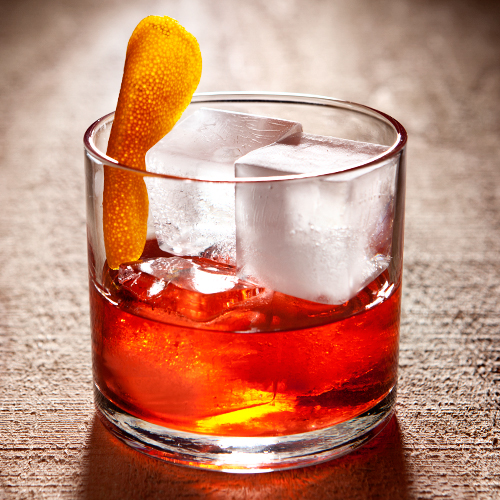
The Old Fashioned at Old Fifth: Slowly Destroying Your Liver Never Tasted So Good

Since this blog has the term “old fashioned” at the beginning of the name, I think it’s time we turn our attention away briefly from baseball to something we all enjoy:  alcohol.  Smack dab in the middle of the new condo buildings, pizza parlors, sports bars, other smaller shops, and passed out/hibernating Blackhawks fans, lies an interesting gem of a bar.  Opened in 2013, Old Fifth boasts “whiskey, pizza, and social fare” on their website’s home page, and they deliver in a great way.

I remember walking in there for the first time in the Fall of 2013.  The idea of a whiskey bar in the West Loop really enticed me.  Instead of venturing up to River North and bumping into pretentious douche after pretentious douche just to get my fix of single malt scotch, I could just hop on a bus and be at Old Fifth in approximately ten minutes.

As I walked in that first time, I remember thinking this place looks expensive. Well guess what?  If you want cheap beer, you can get your PBR in a can.  But if you want to class it up a bit, you will definitely be in awe of the three fully stocked shelves of whiskey and bourbon on the left end of the bar, and three shelves of single malt scotch on the right end of the bar.  They also have a nice line of their own signature cocktails.  Their food is also quite exceptional, from the truffle fries served with a truffle aioli sauce, to the tator tots stuffed with bacon and cheese, topped with horseradish sauce and a jalapeno pepper slice, to the various pizza styles, Old Fifth does boast some very appetizing food options.

The first item on their craft cocktail list is their Old Fashioned:  Buffalo Trace bourbon, Demerara syrup, and Angostura bitters. Old Fifth’s recipe includes two maraschino cherries and an orange peel to their drink, with two or three thick ice cubes.  The result is the most delicious craft cocktail I’ve had to date.  (Side note: I am not afraid to admit it, but at that stage in my life, I had never had an Old Fashioned before, nor had I seen even a single episode of AMC’s Mad Men.  Now that I am well into the 6th season of the fantastic series, I have come to realize that Don Draper had excellent taste in alcohol.)

Old Fifth has a history page on their website explaining the origin of their bar name, but simply put, the West Loop used to be the “old fifth” ward of Chicago prior to the Great Chicago fire (not to be confused with the Chicago Fire soccer team; they are not great at all).

I have been to at least two dozen other bars in Chicago, Minneapolis/St. Paul, and Milwaukee, in search of a comparable Old Fashioned, and at almost every other place they are mostly all crap, even the ones that specifically list Old Fashioned as one of their signature cocktails.  Why is there such a variance between the quality of this drink?  Are my taste buds that more refined than the average person? (The answer is:  No, Nathan, so stop being a pretentious douche).  I have watched several bartenders outside of the West Loop make this drink.  Many places use actual packets of Sweet ‘N Low or Splenda, muddle orange and/or cherries, a full glass of ice, and then pour bourbon to the rim of the glass.  What you end up getting is a watered-down bourbon and fruit cocktail with sweetener in it.  Needless to say, the search is on for a variation of this drink that gives Old Fifth a run for their money.

I have reverse engineered the Old Fifth’s Old Fashioned to the best of my ability, although I do not include the orange peel or cherries to my drink.  I’m a little lazy like that.  It’s very close, but I still have to go out and have this $11 masterpiece at least once a week.  The Daily Beast published a very well-written piece about the history of the Old Fashioned, its resurgence as a cocktail mainstay, and also led me to the 2014 book, “The Old-Fashioned: The Story of the World’s First Classic Cocktail, with Recipes and Lore” by Robert Simonson.  Needless to say, I ordered this book last night, and it will soon be apart of my library.  Over the course of time, I will try some of these recipes, submit some photographs of the finished drink, and report back to you the results.

Until then, whether you’re in Chicago to catch a Bulls or Hawks game (or a baseball game at this time of year) and you need a place to pre-game or have post-game victory drinks (or both; nobody’s judging your drunk ass), or if you’re in town for vacation or a business trip, this bar on 1027 W Madison St has everything your stomach and liver desires.  Cheers!

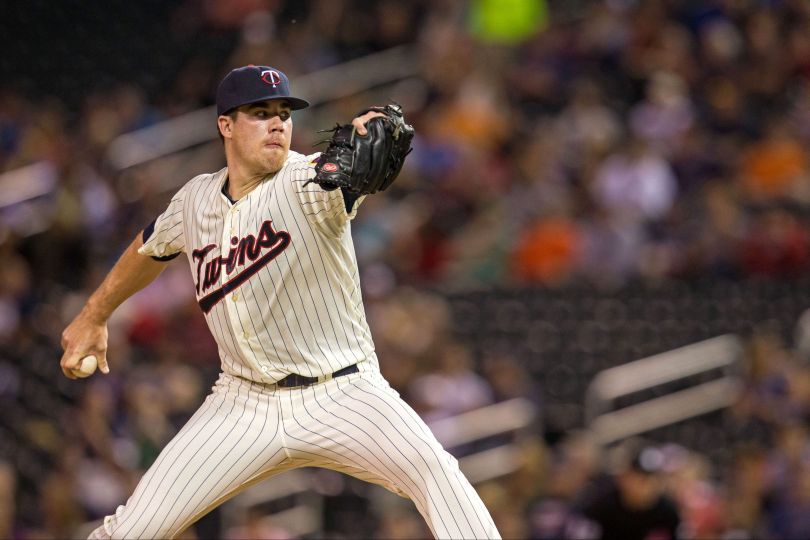
Trevor May’s Demotion Might Be the Twins’ Best Midseason “Acquisition”

When Ervin Santana finished serving his 80-game suspension on July 3, it created an unforeseen logjam with the starting rotation.  Rather than elect to send Mike Pelfrey (or other starters) to the bullpen, it was decided that rookie Trevor May would receive the demotion.  With a 1.8 WAR, May stands as the best pitcher on the Twins MLB roster, so I admittedly was perplexed at the decision to regulate May as a reliever.  The conventional wisdom would say that it is inherent to May’s continuing development that he remain in the rotation for as long as possible.

Now that we’ve seen May in the bullpen for a month, I thought it would be interesting to take a look at his starter vs. reliever splits:

Trevor May, 2015

Starter:     80 1/3 IP, 7.95 K/9, 4.37 ERA, 3.19 FIP, 1.7 WAR, 20.5 K%

Reliever:  11 1/3 IP, 7.94 K/9, 3.18 ERA, 3.26 FIP, 0.1 WAR, 20.4 K%

Wins Above Replacement (WAR) is typically not very kind to a reliever due to the small sample size of innings pitched, which is why May is now “merely” a replacement-level player at this point.  So, we can ignore (but not entirely ignore) May’s WAR value for the time being and still come to the conclusion that May is essentially the same pitcher whether he starts the game, or pitches in the 8th inning.  The value that we want to spend more time focusing on is his FIP.

Fielding Independent Pitching (FIP) is a good way to quantify pitching performance by solely taking into account the types of pitching outcomes that May can control:  strikeouts, walks, hit batters, and home runs allowed.  A pitcher’s ERA takes many things into account, such as poor defensive players and positioning, and research does show that how a ball is put into play is out of the pitcher’s control.  FIP can give us a better interpretation of a pitcher’s performance, and it is to be put into context similar to that of the ERA.

(Side note:  While WAR is league and park adjusted, a pitcher’s FIP is not.  Therefore, if you pitch substantial innings in pitcher-friendly ballparks like Petco Field in San Diego, then you should have a lower FIP than anyone who pitches in Coors Field.  Fangraphs uses FIP- as a statistic that utilizes league/park/playing era adjustments.  I may utilize that in future posts; I might not).

Ok, so if I just said Trevor May is essentially the same pitcher regardless of his role on the pitching staff, then how is his new role the better of the two moves?  Well, we have to dig a little deeper in his metrics:

Trevor May Advanced Metrics, 2015

          HR/FB      BB%     LOB%      FBv

 Starter:   7.1%       5.2%     69.5%   92.2MPH

Reliever: 6.3%        4.1%     82.2%   94.8MPH

These statistics are very meaningful for a variety of reasons.  The Twins’ bullpen ranks 28th in WAR (0.1), 24th in ERA (3.99), 28th in FIP (4.23), and of course, dead last in K/9 (6.23).  While May’s numbers as a whole don’t mean he’s the next Aroldis Chapman, his performance indicators provide improvement to a bullpen that fails to strand runners while giving up a high percentage of home runs per fly balls (10.3%).  You also notice his four seam fastball velocity has risen since being moved to the bullpen.  I have seen it top 96MPH on a couple of occasions, and his average velocity is 3rd best in that bullpen.

So simply put, while Trevor May is probably a B/B- starting pitcher (he would rank 46th in WAR and 34th in K/9 for starting pitchers), he really is only an average reliever in a bullpen full of below average relievers.  May will probably not see another start until September at the earliest when the roster expands to 40 players.  He has shown marked improvement over his first stint in the Majors last August and September, and should be a strong candidate for a rotation spot in 2016.  But with Ryan Pressly (94.3 FBv) just being moved to the 60-day DL, and the trade deadline acquisition of Kevin Jepsen (94.5 FBv) from the Rays, there are very few alternative options to stabilizing a bullpen for the remainder of the season that notoriously lacks power arms.